Articles
|
Best Headless CMS in 2026
Eight headless CMS platforms compared honestly, with pricing, self-hosting, and use-case guidance.

Matt Minor
Senior Director, Growth

The headless CMS market has gotten loud. Dozens of platforms, overlapping positioning, and there seems to be a new one every day.
Here's what actually differentiates headless CMS platforms in 2026:
the underlying data model (document vs. database),
deployment model (SaaS vs. self-hosted),
who the admin interface is built for (developers only vs. cross-functional teams), and
how they handle AI integrations.
We organized this list around those dimensions rather than feature count. This is also not in any particular order - because different use cases require different solutions.
Quick comparison
Platform | Self-hosted | License | Database | APIs | Starting price |
|---|---|---|---|---|---|
Directus | Yes | Source-available (MSCL) | Any SQL | REST, GraphQL, realtime | Free |
Contentful | No | Proprietary | Contentful only | REST, GraphQL | Free tier |
Sanity | No | Proprietary | Sanity Content Lake | GROQ, REST | Free tier |
Strapi | Yes | MIT | MySQL, PostgreSQL, SQLite | REST, GraphQL | Free |
Payload | Yes | MIT | MongoDB, PostgreSQL | REST, GraphQL | Free |
Hygraph | No | Proprietary | Hygraph only | GraphQL | Free tier |
Storyblok | No | Proprietary | Storyblok only | REST | Free tier |
Prismic | No | Proprietary | Prismic only | REST, GraphQL | Free tier |
Directus
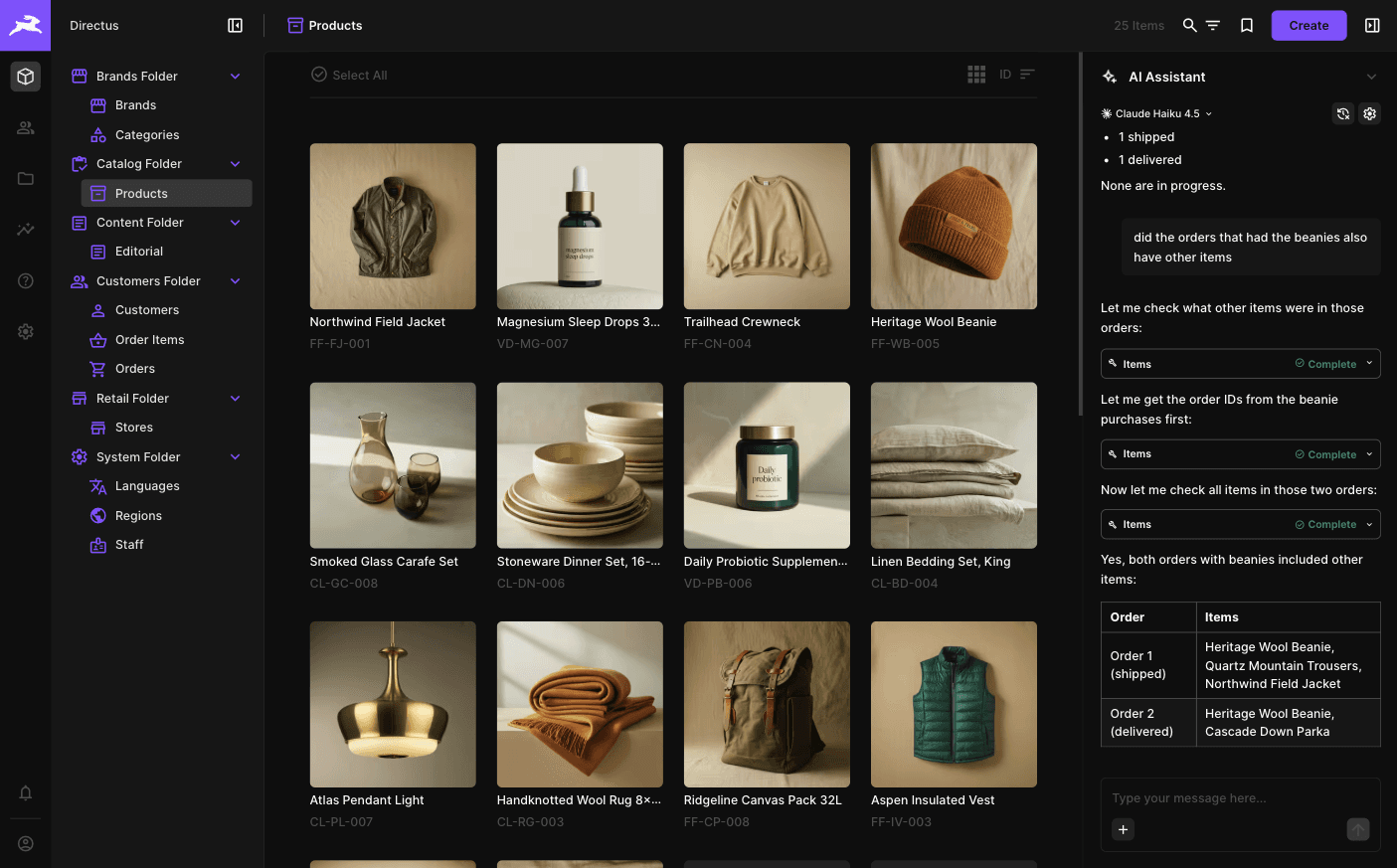
Directus sits on top of your existing SQL database and generates REST and GraphQL APIs automatically, provides a no-code admin UI, and provides a native MCP and AI Assistant.
The key architectural difference from most tools on this list: the data lives in your database, not in Directus. You could remove Directus tomorrow and your data would still be there, in a format you own.
That database-first model means Directus works with existing databases, not just greenfield schemas. If you have a PostgreSQL database already running production data, you can connect Directus to it and get a no-code admin interface and full API stack in minutes.
The Studio (the admin interface) is built for non-technical users, not just developers. Content editors, ops teams, approvers - they can all use it without writing code. Most headless CMSes say they support non-developers; Directus actually designed the interface for them.
For AI workflows, Directus ships a native MCP server. Your agents interact with your content through the same role-based permissions as human users, so governance is applied by default rather than bolted on.
Best for: Teams that need both a developer API and a non-technical admin interface. Projects where data ownership and self-hosting matter. Connecting Directus to a database that already exists. Applications where the data model is complex or already lives in production.
Strengths:
Database-first: connects to any SQL database (PostgreSQL, MySQL, SQLite, MS SQL, CockroachDB, MariaDB)
Visual permissions model with role-based access at the field level
REST + GraphQL + WebSocket subscriptions out of the box
Native MCP server for AI agent integrations (Claude, Cursor, ChatGPT)
Free to self-host
Weaknesses:
Source-available, not OSI-approved open source (matters if your organization has licensing requirements)
Smaller extension marketplace
More initial configuration than simpler tools
Pricing: Directus is completely free for organizations under $5m annual revenue and less than 50 employees. Our core tier is free to self-host, and we provide hosted Cloud for $99/mo. Enterprise available upon request.
Contentful
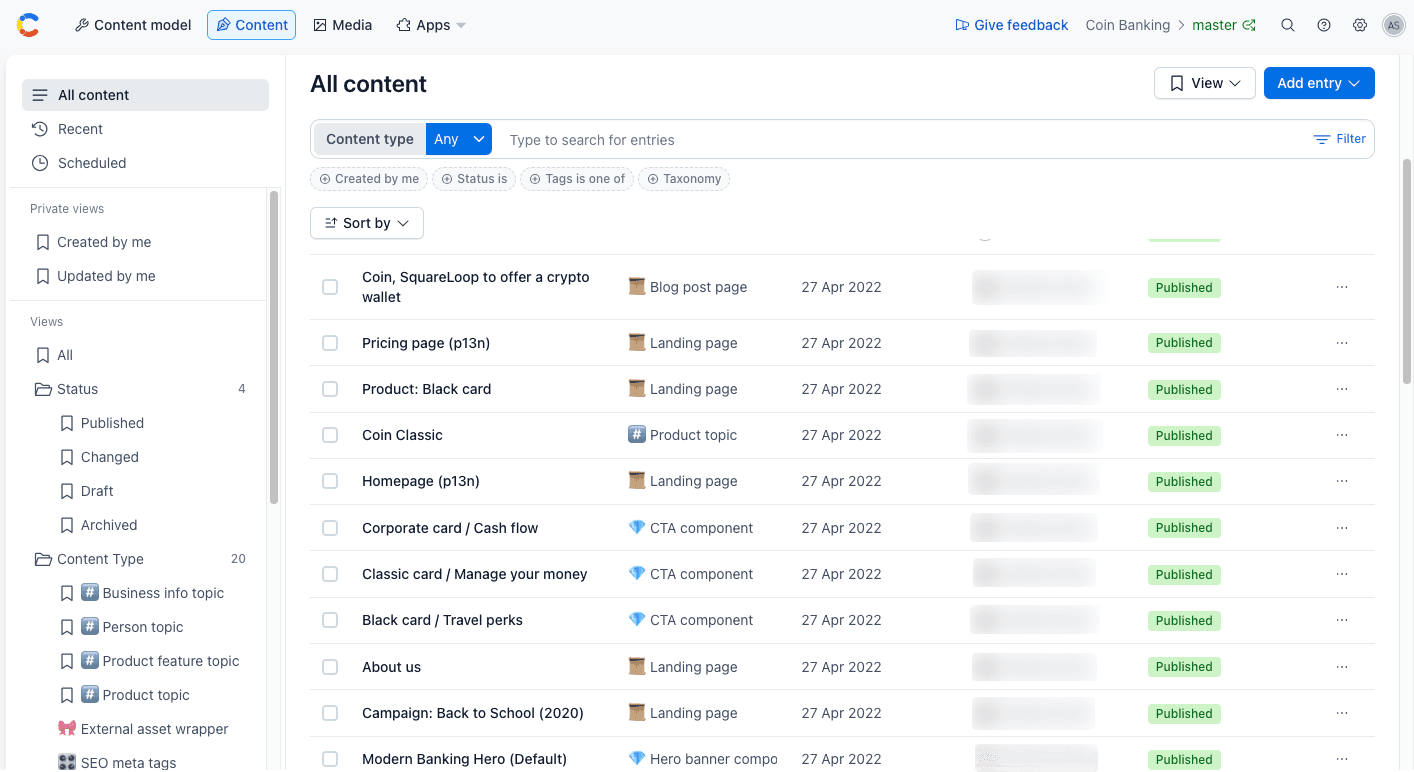
Contentful is the most established name in headless CMS. It has been around since 2013, built the category's initial playbook, and has the largest enterprise customer list. It's SaaS-only: your content lives in Contentful's infrastructure, not yours.
The editorial interface is built for content teams. Content modeling is approachable. CDN delivery is a core part of the product. For large organizations with established content teams, global delivery requirements, and enterprise SaaS budgets, Contentful fits.
The trade-off: you don't own the data infrastructure, migration costs are high once you're in, and pricing climbs fast past the free tier.
Strengths:
In production at large enterprises
Editorial UI built for content teams
Global CDN delivery
Large number of third-party integrations
Enterprise SLAs and support
Weaknesses:
SaaS-only - no self-hosting option
Proprietary and closed-source
No access to the underlying database
Expensive past the free tier
High migration cost if you decide to leave
Pricing: Free tier (5 users, 25k records). Enterprise custom. Verify at contentful.com/pricing.
Sanity
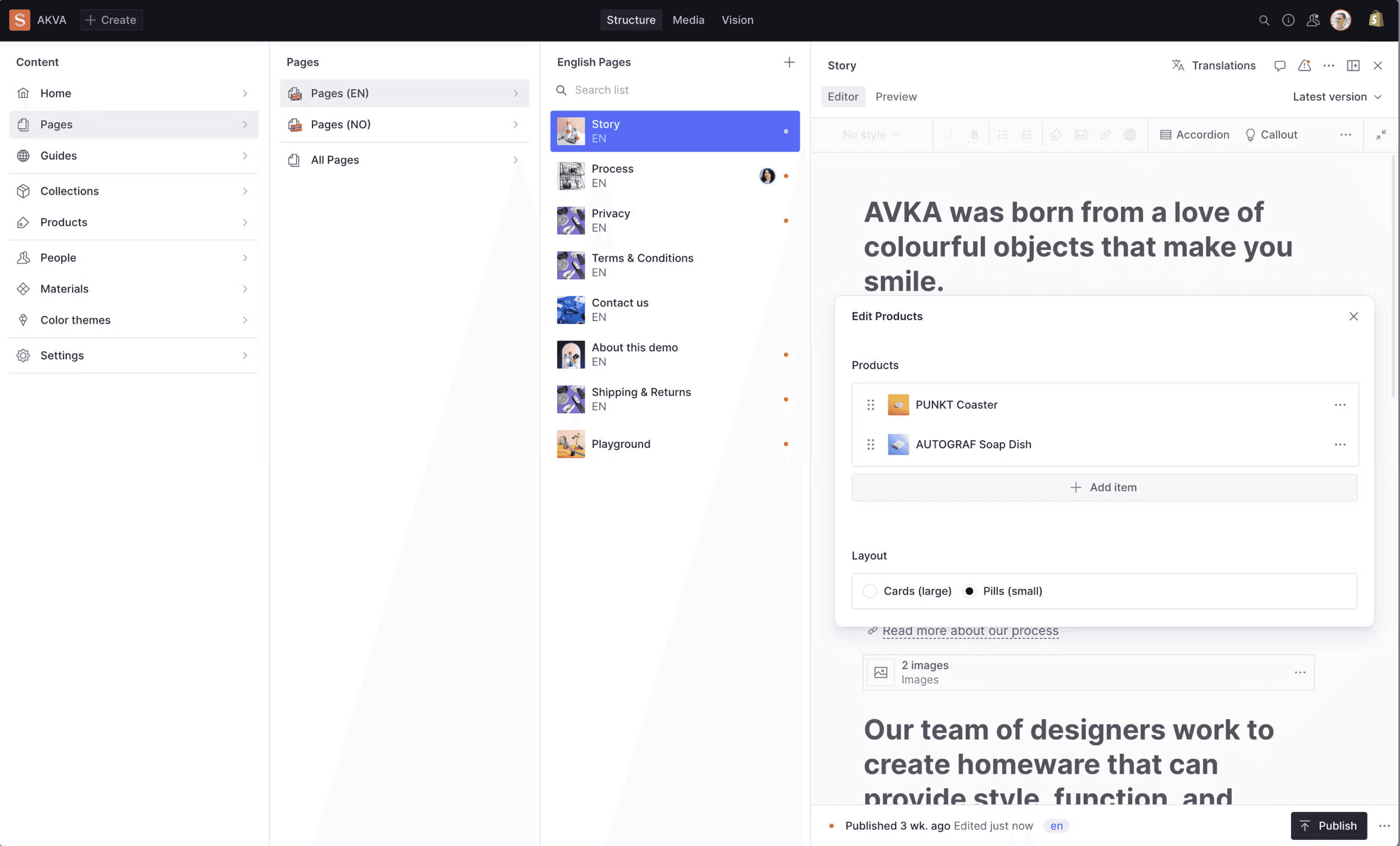
The Sanity Studio is customizable: developers can extend it with React components. GROQ, Sanity's query language, handles complex content relationships. Real-time multiplayer editing is available.
Your data lives in Sanity Content Lake, a hosted document store. You don't run Sanity yourself. That's a reasonable trade for many teams; it's a constraint worth knowing upfront.
Strengths:
Real-time multiplayer editing
Studio customizable via React components
Developer-focused tooling with documentation
Free tier available
Weaknesses:
SaaS-only data layer - no self-hosting
GROQ has a learning curve for teams coming from SQL
Pricing scales with API usage, which can spike unexpectedly at scale
No SQL access
Pricing: Free (3 users, 100k documents). Enterprise custom. Verify at sanity.io/pricing.
Strapi
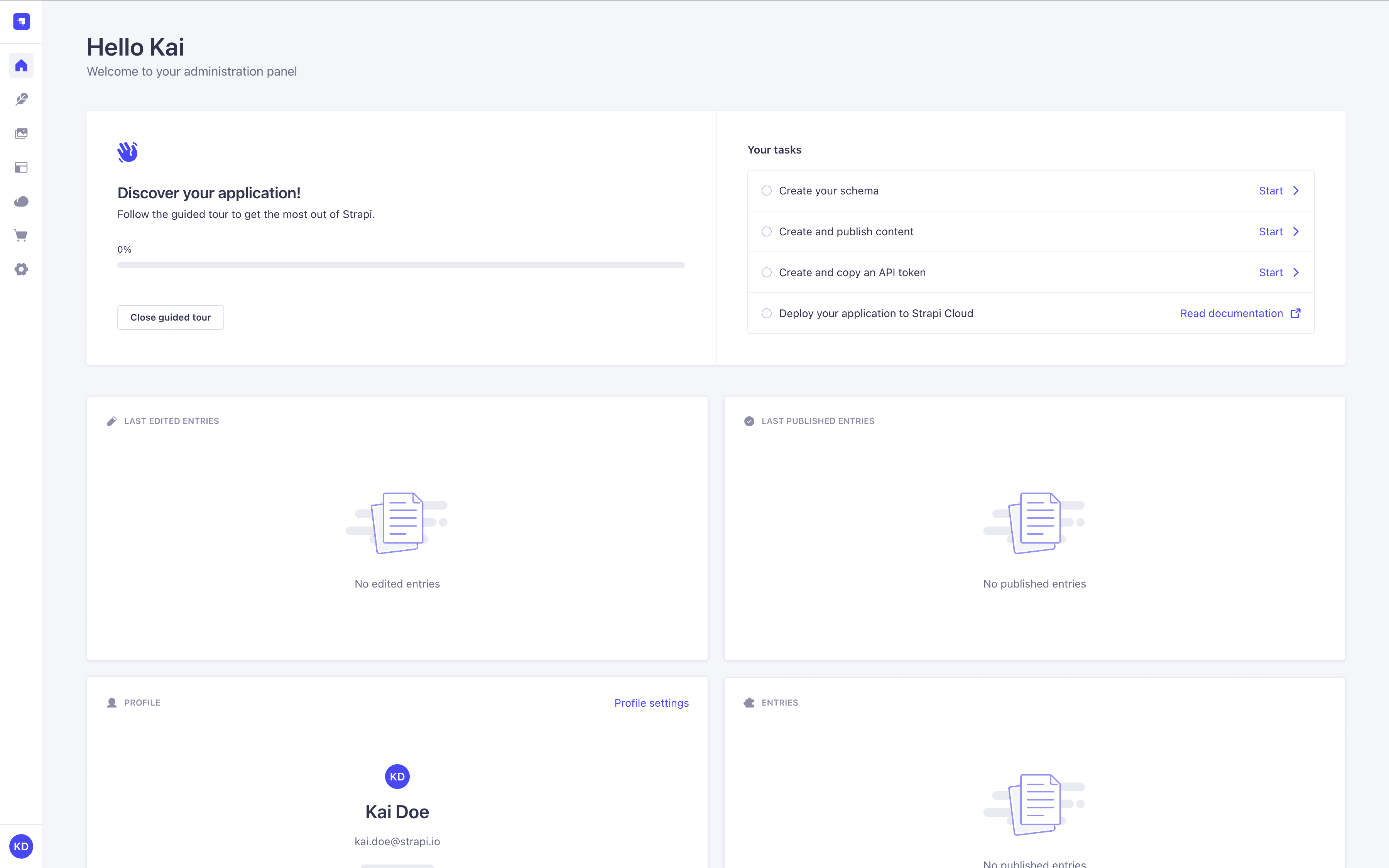
Strapi is MIT licensed. That means you can read, fork, and modify the source code without asking permission. If your organization has an OSI-approved open source requirement, Strapi and Payload are the two realistic options on this list. Strapi has been around longer and has the larger community and plugin marketplace.
Strapi is code-first: your content schema lives in code rather than a GUI. Developers control the data model, but Strapi is a poor fit for existing databases. The schema needs to match what Strapi generates, not the other way around.
Strengths:
MIT licensed
Community and plugin marketplace
JavaScript and TypeScript native
Quick to set up on a new project
Documentation covers most use cases
Weaknesses:
Code-first: poor fit for connecting to existing databases
Admin UI is oriented toward content editors, not cross-functional teams
Less flexible than database-first alternatives for complex or evolving data models
Pricing: Free to self-host (MIT). Enterprise custom. Verify at strapi.io/pricing.
Payload

Payload launched in 2022 and grew quickly, mostly through word of mouth from TypeScript developers who wanted a CMS that felt like their own code rather than a third-party dependency. The Next.js integration is native.
It's squarely aimed at developers. Non-technical team members can use the admin panel, but it's not designed for them the way Directus or Storyblok are.
Strengths:
TypeScript-native from the ground up
Configuration as code (version-controllable alongside your app)
Native Next.js integration
MIT licensed
Active development; community is growing
Weaknesses:
Younger and smaller community than Strapi
Code-first model requires developer involvement to change schemas
Fewer third-party integrations than more established tools
Admin UI not optimized for non-technical users
Pricing: Free to self-host. Cloud from $45/month. Enterprise custom. Verify at payloadcms.com/pricing.
Hygraph
Hygraph (formerly GraphCMS) is built around GraphQL natively.
Strengths:
Native GraphQL architecture
Useful for teams aggregating content from multiple sources
Weaknesses:
SaaS-only
Less intuitive for teams not already fluent in GraphQL
Pricing: Free tier. Scale from ~$299/month. Enterprise custom. Verify at hygraph.com/pricing.
Storyblok
The block-based content model mirrors frontend component architecture well, which makes it a natural fit for agencies building client sites where non-technical stakeholders need to manage pages. Less flexible for developers.
Strengths:
Block-based model maps to frontend components
Used by agencies and digital marketing teams
Weaknesses:
SaaS-only
Component-centric model constrains structured data use cases outside of page content
Less suitable for application-level data beyond content
Pricing: Free (1 user). Business and Enterprise custom. Verify at storyblok.com/pricing.
Prismic
Prismic is quick to get running. The slice-based model works well for landing pages and marketing content. If you're building a straightforward marketing site or blog and don't need complex data relationships or application-level flexibility, Prismic removes a lot of decisions you'd otherwise have to make.
Strengths:
Quick to get started with minimal configuration
Slice-based model for marketing and editorial content
Simple admin interface
Weaknesses:
Less flexible for complex data models
Limited query capabilities compared to others on this list
Not well-suited for application data beyond content pages
Pricing: Free (1 user). Starter from $7/user/month. Enterprise custom. Verify at prismic.io/pricing.
How to pick
Don't optimize for features. Optimize for fit.
You have an existing SQL database: Directus is the only tool on this list that connects to it natively, without requiring you to restructure around the CMS's schema.
OSI-approved open source is a hard requirement: Strapi or Payload. Strapi if community size matters; Payload if TypeScript and version-controlled config are the priority.
Your team is primarily non-technical editors who need to build pages: Storyblok for visual page building; Directus if you also need a full developer API alongside the editorial interface.
Common questions
What is the best open source headless CMS?
For any organization under $5m annual revenue and less than 50 employees, Directus completely free to use without limits. You can acquire an Open Innovation Grant license key at directus.com/oig. Directus is source-available under the MSCL. Strapi and Payload are the two OSI-approved open source options with meaningful traction in 2026.
What is the difference between a headless CMS and a traditional CMS?
A traditional CMS like WordPress handles both content storage and presentation - it controls how content looks. A headless CMS stores content and serves it via API, leaving presentation entirely to your frontend. The "head" (the rendered interface) is decoupled from the content layer underneath.
Which headless CMS is best for developers?
It depends on what kind of developer. Teams that need both a developer API and a no-code admin interface for non-technical teammates often land on Directus.
Which headless CMS platforms can be self-hosted?
Directus, Strapi, and Payload all support self-hosting with full feature parity. Contentful, Sanity, Hygraph, Storyblok, and Prismic are SaaS-only.
This page was written by Directus. We tried to make it useful enough to trust despite that. If something is inaccurate, let us know.
Try Directus yourself
npx
directus-template-cli@latest init
Or read the docs if you want to understand the architecture first.
KEEP EXPLORING
Explore the product context, implementation paths, and more guides from Directus.

