Articles
|
Tool vs. Feature: What’s the Difference?
Dive into the distinction between tools and features. While features enhance, tools empower. Discover how we view this pivotal difference.

Benjamin Haynes
CEO, Founder
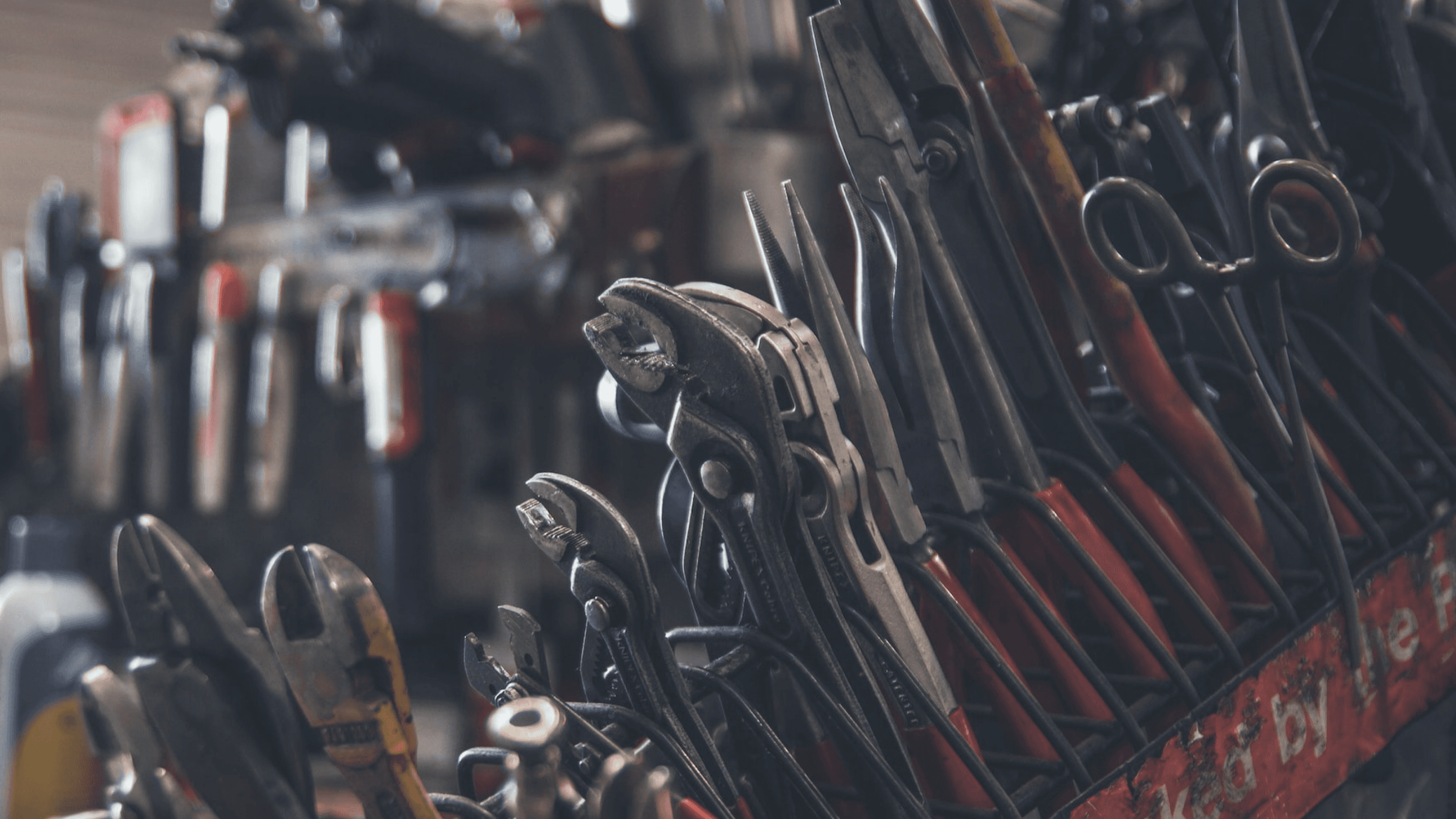
Read any product marketing ad, datasheet, web copy or other deliverable, and you’ll see the word “feature” multiple times. Phrases such as “feature-rich” and “feature-packed” imply that the product offers a complete or innovative solution that is better than other available solutions with fewer features. “Tool” on the other hand, is often used interchangeably with “platform” or “solution,” to denote an individual, encapsulated “thing” that can be used to perform a specific action or set of actions.
At Directus, we beg to differ. In fact, we think it’s the other way around.
Think of a carpenter’s toolbelt. What’s in it? A hammer, screwdriver, pliers, untility knife, measuring tape and other tools that the contractor needs to use frequently. That way, they’re prepared for nearly any job required – without having to return back to the truck to carry something back to the jobsite.
A hammer is used primarily to drive nails into wood, and a knife is mostly used to cut material. However, hammers can be used for things other than pounding nails into wood – they can help pry nails out of wood, nudge boards into place or break up certain materials. A knife can be used to open packages or pry glue off of a surface. You get the picture: tools provide basic functions that are applicable across many scenarios.
Using the same analogy, let’s consider what a feature might be. A feature of the toolbelt may be the number of pockets or the desired material. It may have an adjustable buckle or a pouch for your cell phone. A feature of the hammer might be a longer handle, and the knife might have a clip so you can hang it on a jean pocket. While these features are useful, they don’t really help you build anything – the tools themselves do.
Directus has a lot of amazing features. It can be self-hosted or deployed in the cloud. It works with any SQL database and delivers blazing fast response times. There’s no vendor lock-in, and it’s fully extendable. But what really sets it apart is its broad set of tools that enable you to build any digital project you can imagine. That’s why instead of hyping up our capabilities as “features,” we prefer to call them tools.
Our Toolbelt is Stacked
Here are just a subset of the tools Directus packs in its toolbelt:
Explore
Revision history to track all changes
A customizable form editor
Commenting and a built-in notification system
A multilingual app for full internationalization
Batch editing for editing multiple items at once
Custom dataflows to enable automation
Files
On-the-fly thumbnail generation
Nesting folders and archiving for better file organization
Storage adaptors to accommodate S3, local storage and more
An Image editor for in-app transformations
Drag & drop uploads to import content from the desktop
Private file keys to enable file permissions
Insights
Insight dashboards with the ability to tailor data charts
Full white-labeling that inherits your branding
User-configurable light/dark mode
Customizable user preferences, interfaces, displays, layouts and modules
Custom API endpoints and filters, and custom event hooks
Modular and extensible codebase for advanced customization
Automate
Data flows for task automation, alerting, and data transformations
Rest and GraphQL APIs, and Dynamic API references based on your schema
Event hooks and webhooks for dynamic data updates
Flexible data export options – JSON, CVS and XML
Vendor-agnostic schema migrations
Activity logs for access and change control
Auth
Two-factor authentication
Single sign-on support for OAuth2, OpenID, LDAP, and SAML
Granular permissions via rule-based access, with unlimited user roles
Parameterized queries to avoid SQL injections
Argon2 hashing for secure token storage
With all of these tools in your toolbelt, just imagine the possibilities for what you can create.
Ready to move faster?
30 minutes with a product specialist. See how Directus fits your stack.
KEEP EXPLORING
Explore the product context, implementation paths, and more guides from Directus.

